
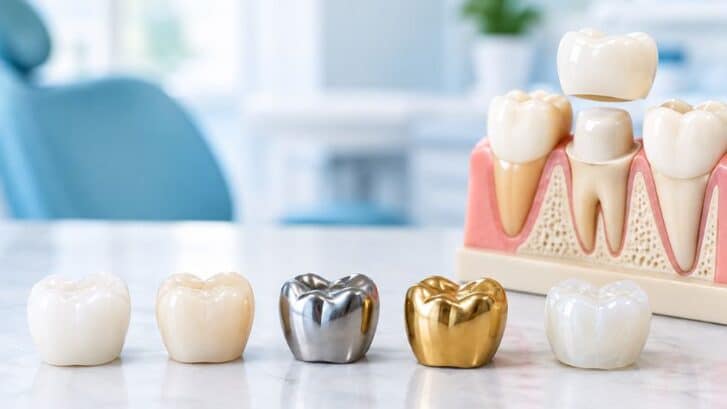
Types of Dental Crowns: Materials, Benefits, and Uses
Dental crowns are commonly used to restore teeth that have been weakened by decay, cracks, root canal treatment, heavy biting forces, or significant wear. A crown covers the visible portion of a tooth, helping restore its shape, strength, and function while protecting the remaining tooth structure. Modern crowns can also be designed to closely resemble natural teeth.
When choosing a crown, the material matters. Different types offer different combinations of strength, appearance, durability, and suitability for particular areas of the mouth. Understanding the available options can help you have a more informed conversation with your dentist.
Porcelain Crowns
Porcelain crowns are popular because they can closely replicate the appearance of natural enamel. Their color and translucency can be matched with neighboring teeth, making them particularly useful when appearance is an important consideration.
These crowns may be considered for visible teeth where a natural-looking restoration is desired. However, the appropriate material depends on the location of the tooth, the amount of remaining tooth structure, and the forces placed on it during chewing.
Ceramic Crowns
Ceramic crowns are another tooth-colored option used to restore damaged or weakened teeth. They can provide a natural appearance while restoring the shape and function of the tooth.
Because ceramic materials vary in strength and composition, your dentist will consider your individual needs before recommending a particular type. Factors such as bite pressure, tooth position, and cosmetic expectations can all influence the decision.
Metal Crowns
Metal crowns are known for their strength and resistance to wear. They can be useful for teeth that experience substantial chewing forces, particularly back teeth.
One limitation is their metallic appearance, which may make them less desirable for highly visible teeth. However, their durability can make them a practical restorative option in specific situations.
Porcelain-Fused-to-Metal Crowns
Porcelain-fused-to-metal crowns combine a strong metal foundation with a tooth-colored porcelain outer layer. This design provides a balance between structural support and appearance.
These crowns have traditionally been used when both strength and a more natural-looking surface are needed. Your dentist can assess whether this combination is appropriate based on the tooth being restored and your overall dental needs.
Stainless Steel Crowns
Stainless steel crowns are commonly associated with pediatric dentistry. They can protect primary teeth that have extensive decay or damage when a traditional filling may not provide sufficient coverage.
The crown helps maintain the tooth until it is naturally ready to be replaced. Stainless steel crowns are generally selected for their durability and ability to withstand everyday chewing forces.
How Is the Right Crown Selected?
The best crown material is not the same for every patient. Your dentist may consider the location of the tooth, its condition, your bite, cosmetic expectations, and how much natural tooth structure remains.
For patients considering a dental crown in Snellville, a dental examination can help determine whether a crown is appropriate and which material may provide the right combination of protection, function, and appearance.
The crown process may involve preparing the tooth, taking a model or impression, creating a custom restoration, and securing the finished crown over the prepared tooth. The provided practice information notes that crown treatment may involve two appointments, with the custom crown created by a local laboratory.
Caring for a Dental Crown
A crowned tooth still needs regular oral hygiene. Brush twice daily, clean between your teeth, and attend routine dental examinations. Good care can help protect both the crown and the natural tooth underneath.
If you have a damaged, weakened, heavily worn, or root-canal-treated tooth, Contact Us to discuss whether a crown could be suitable for your situation.
Choosing the right restoration starts with an examination and an understanding of your individual dental needs. To discuss available crown options and restorative care, you can visit our dental office for an evaluation.
Frequently Asked Questions
- Which type of dental crown looks most natural?
Porcelain and ceramic crowns can provide a natural-looking appearance because their color and translucency can be matched to surrounding teeth, making them especially useful for visible areas.
- How long can a dental crown last?
The lifespan of a crown varies based on its material, location, bite forces, oral hygiene, and daily habits. Proper care and routine dental visits can support long-term performance.
- Are metal crowns still used?
Yes. Metal crowns remain an option for certain teeth because they are strong and resistant to wear. They may be considered when durability is more important than a tooth-colored appearance.
- Can a crown repair a cracked tooth?
A crown may help protect and restore a tooth with significant structural damage. The appropriate treatment depends on how deep and extensive the crack is and whether the tooth remains restorable.
- Can crowns be used after root canal treatment?
Yes. Teeth that have undergone root canal treatment may require additional protection because they can be more vulnerable to fracture. A crown can cover and reinforce the remaining tooth structure.
- Are porcelain crowns strong enough for back teeth?
Some modern ceramic and porcelain materials can provide substantial strength, but suitability depends on the individual tooth, bite forces, and the specific material selected by the dentist.
- How do I care for a dental crown?
Care for a crown much like your natural teeth: brush regularly, clean between teeth, avoid damaging habits, and maintain routine dental examinations to monitor the crown and surrounding tooth