
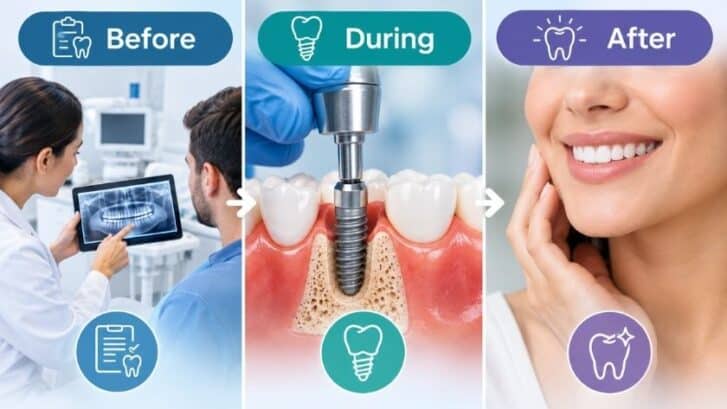
What Happens Before, During, and After Dental Implant Surgery?
Dental implants can replace missing teeth with a stable, natural-looking solution. However, getting an implant involves several stages, from the first consultation and treatment planning to surgery and healing. Understanding each stage can help patients in Snellville feel more prepared and know what to expect throughout the process.
Before Dental Implant Surgery
The dental implant process begins with a detailed evaluation. Your dentist will examine your teeth, gums, jawbone, and overall oral health. X-rays or 3D dental imaging may be used to assess bone density and identify the ideal position for the implant.
Your medical and dental history will also be reviewed. Certain conditions, medications, smoking habits, or existing gum problems may affect implant treatment and healing. If there is not enough healthy jawbone to support an implant, bone grafting may be recommended before implant placement.
Our dentist will also discuss the treatment plan, including the number of implants needed, the expected healing period, and the type of restoration that will eventually be attached. Good oral hygiene before surgery is important because healthy gums can support better healing.
During Dental Implant Treatment
On the day of surgery, the treatment area is carefully prepared, and local anaesthesia is generally used to keep the procedure comfortable. Sedation may also be considered depending on the patient’s needs and the planned procedure.
The dentist creates a small opening in the gum to access the jawbone. A titanium implant post is then carefully positioned into the bone. This post serves as an artificial tooth root.
After placement, the gum may be closed with stitches, depending on the surgical approach. The implant is then allowed to heal and integrate with the surrounding bone. This natural process, known as osseointegration, is an important part of successful implant treatment.
The length of surgery varies depending on factors such as the number of implants being placed and whether additional procedures are required.
After Dental Implant Surgery
Some swelling, tenderness, bruising, or minor bleeding may occur after implant surgery. These effects are usually temporary. Your dentist will provide specific aftercare instructions based on your procedure.
During the initial healing period, patients may be advised to eat softer foods and avoid putting unnecessary pressure on the surgical area. Keeping the mouth clean is also important, although brushing directly over the surgical site may need to be avoided temporarily.
Follow-up appointments allow your dentist to monitor healing and check the condition of the implant. Over several months, the implant can gradually bond with the jawbone and become a stable foundation for the replacement tooth.
Once healing is sufficient, an abutment may be attached to the implant. The final dental crown, bridge, or denture can then be fitted. The restoration is designed to restore function and create a natural appearance.
At Brookwood Dentistry, patients in Snellville can discuss their individual dental implant needs and learn what each stage of treatment may involve. Since every patient has different oral health needs, the treatment timeline can vary.
Caring for Your Dental Implant
Good oral hygiene remains important after the final restoration is placed. Brushing twice daily, cleaning between teeth, and attending regular dental check-ups can help maintain the surrounding gums and implant.
Avoiding tobacco products can also support healthy oral tissues and healing. Your dentist may recommend specific cleaning techniques or oral hygiene products based on the type of implant restoration you receive.
If you have questions about your treatment options or need further information, you can contact us to discuss your dental concerns.
For patients looking for ongoing professional dental care, visit our dental clinic to learn more about maintaining your oral health before and after implant treatment.
Frequently Asked Questions
- How long does the dental implant process take?
The complete process can take several months because the implant needs time to bond with the jawbone. The exact timeline depends on healing, bone health, and whether additional procedures are required.
- Is dental implant surgery painful?
Dental implant surgery is performed with anaesthesia to keep the treatment area comfortable. Some tenderness, swelling, or soreness may occur afterwards, but these effects are generally temporary.
- Can I eat normally after implant surgery?
Soft foods are commonly recommended during the early healing period. Your dentist will provide guidance about suitable foods and when you can gradually return to your normal eating habits.
- How long does an implant take to heal?
Healing time varies between patients. Osseointegration, when the implant bonds with the jawbone, can take several months before the final restoration is placed.
- Is bone grafting always needed for dental implants?
No. Bone grafting is only recommended when there is insufficient healthy bone to provide adequate support for an implant. Your dentist can determine this through examination and dental imaging.
- When is the permanent crown placed?
The permanent crown is usually placed after the implant has sufficiently healed and integrated with the jawbone. The timing depends on individual healing and the treatment plan.
- How should I care for dental implants after treatment?
Dental implants require regular brushing, interdental cleaning, and professional dental check-ups. Maintaining healthy gums and good oral hygiene is important for supporting the long-term function of the restoration.


